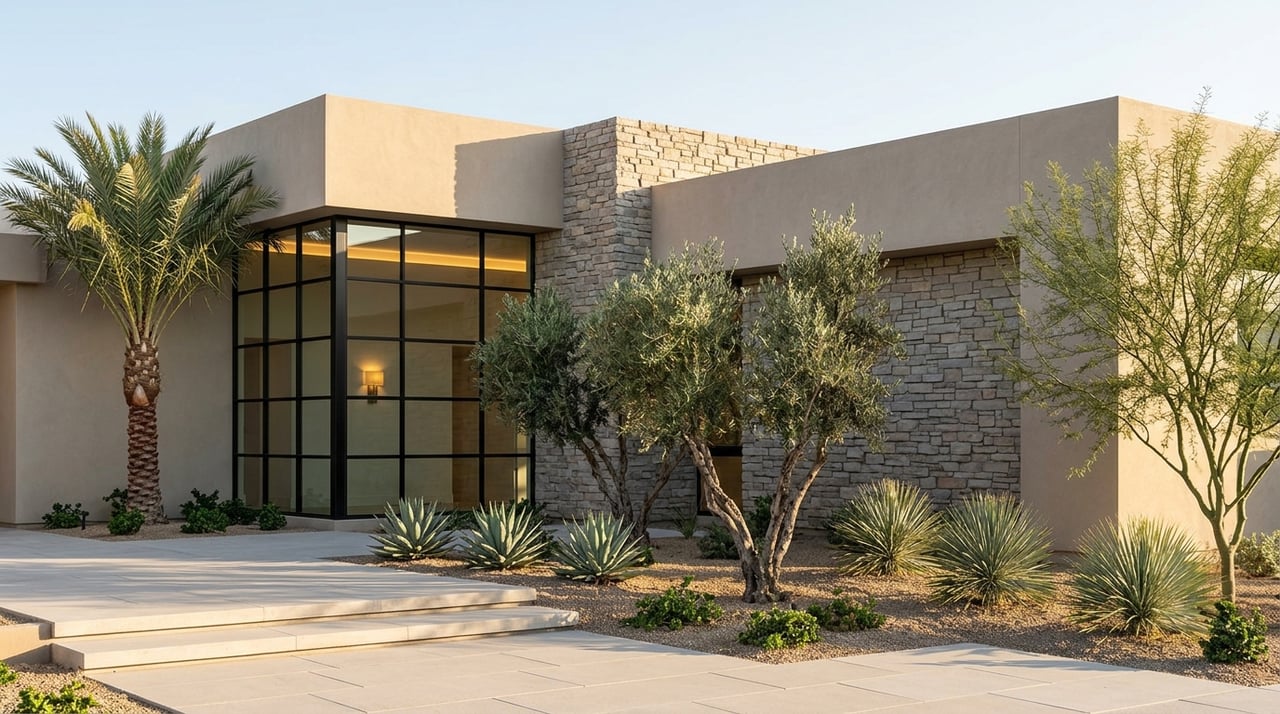
Smart Indian Wells Luxury Home Pricing Strategies
April 16, 2026
April 16, 2026
If you price your Indian Wells luxury home based on a citywide average, you could leave money on the table or lose valuable momentum in the first few weeks. That is because Indian Wells is not one uniform market, and buyers in today’s conditions are paying close attention to value, timing, and presentation. If you are planning to sell, a smart pricing strategy can help you protect leverage, attract stronger offers, and avoid unnecessary price cuts. Let’s dive in.
Indian Wells remains a high-value market, but current data shows buyers have more room to negotiate than many sellers expect. In February 2026, Redfin reported a median sale price of $1.97 million, 62 median days on market, and 16 homes sold in Indian Wells. Over the same period, Realtor.com reported a $1.30 million median asking price, 163 homes for sale, 54 median days on market, and homes selling at 96% of list price on average.
Those figures measure different parts of the market, so they should not be treated as interchangeable. Still, both point to the same takeaway: pricing accuracy matters. Realtor.com labeled Indian Wells a buyer’s market, while Redfin described it as somewhat competitive, which suggests sellers need a strategy built on local evidence, not optimism.
One of the biggest pricing mistakes sellers make is looking at broad county data and assuming it applies to a luxury property in Indian Wells. In February 2026, Redfin reported a $600,000 median sale price for Riverside County and 73 days on market. Realtor.com reported a $628,500 median listing price, 52 days on market, and a 99% sale-to-list ratio for the county.
That gap helps explain why countywide numbers are too broad to guide a luxury listing in Indian Wells. Your home should be priced against luxury-specific comparable properties, especially those within your own community or nearby competitive pockets. A golf course home, club property, or turnkey second home in Indian Wells competes in a very different lane than the county’s general housing stock.
In Indian Wells, location means more than the city name on the address. Community-level data shows wide differences in pricing, price per square foot, inventory, and market pace.
For example, in March 2026 Desert Horizons market data showed a $1.11 million median listing price, $386 per square foot, 35 active listings, and 64 days on market. Redfin’s sold-data view for February 2026 placed the neighborhood’s median sale price at about $1.0 million.
In Mountain Cove, the median listing price was $397,000, with $431 per square foot, 14 active listings, and 40 days on market. Redfin reported a $450,000 median sale price there in February 2026.
At the higher end, The Vintage showed a $2.8725 million median listing price, $1,076 per square foot, 12 active listings, and 105 days on market. That is a very different pricing environment from other parts of Indian Wells.
The takeaway is simple: a citywide pricing opinion is too blunt. When values range from roughly $397,000 in one community to nearly $2.87 million in another, your list price should reflect the exact pocket, club, or neighborhood where your home sits.
According to the National Association of Realtors consumer guide, a pricing recommendation should account for a home’s size, location, amenities, condition, upgrades, repairs, market conditions, neighborhood developments, and buyer preferences. The same guide explains that comparable sales are recently sold similar properties in the same area, and a comparative market analysis may also include active and under-contract homes.
For an Indian Wells luxury seller, this means your price should come from a focused analysis of recent sales within your specific community, then adjusted for your home’s condition and presentation. A remodeled golf-front property, for example, may justify a different position than a similar floor plan that needs cosmetic work. The goal is not to chase the highest number on paper. The goal is to find the number the market is most likely to reward.
Not every seller has the same timeline, and your pricing strategy should reflect that. The NAR guide notes that if you want to move quickly, your home may need a more competitive price. If you have more time, you may choose to start higher, though that approach comes with risk if the market does not respond.
It also notes that the strongest offer is not always the highest price. Cash offers and offers with fewer contingencies can be more attractive than a higher number with more uncertainty. That is especially important in a market where buyers have choices and may be more selective.
A smart pricing conversation should include:
Luxury sellers sometimes believe they can "test the market" with an aggressive asking price and reduce later if needed. In a shifting market, that can be expensive. Nationally, Redfin reported that 34.2% of sellers cut their list price in February 2026, and those reductions averaged $40,915, or 7.3%.
That matters in Indian Wells, where listings already tend to take time. City-level data showed 54 to 62 days on market depending on source, and The Vintage reached 105 days on market. When a home enters the market too high, buyers may wait, compare, and assume future reductions are coming.
The result is often a weaker negotiating position. Once a listing sits past the typical market window for its community, time on market becomes a signal. Instead of creating urgency, it can raise questions about value.
In a market like this, days on market is not just a statistic. It is feedback. Redfin’s guidance for a shifting market recommends staying close to recent comparable sales, tracking how long homes usually take to sell, and reducing price if your listing passes that timeframe without offers.
That does not mean every home should be rushed into a price change. It means your strategy should include checkpoints. If your listing is not generating qualified showings, serious inquiries, or offers within the expected window for your segment, the market may be telling you something important.
Pricing and presentation work together. Buyers do not evaluate your home in a vacuum. They compare it to everything else they have seen online and in person.
According to the NAR 2025 staging report, 29% of agents said staging increased offered value by 1% to 10%, and 49% said staging reduced the time homes spent on the market. The most common recommendations were decluttering, cleaning, and improving curb appeal.
For Indian Wells luxury sellers, that supports a simple principle: if you want top-tier pricing, your home needs to look ready for it. Thoughtful preparation, polished photography, and strategic updates can help buyers see the value more clearly from day one.
If you are planning a spring launch, timing may offer an advantage. NAR highlighted April 12 through 18, 2026 as a favorable national listing window, noting that homes listed during that week in 2025 sold about 10 days faster than the yearly average and saw about 19% fewer price cuts.
That does not guarantee a premium in Indian Wells. Local conditions still matter more than national seasonality. But it does reinforce an important point: timing can help, yet the strongest results usually come when good timing is paired with a disciplined, community-specific asking price.
For most Indian Wells luxury sellers, smart pricing is not about aiming low. It is about launching with a number that reflects current demand, the realities of your exact community, and the condition of your home.
In practical terms, that often means:
That kind of pricing strategy takes local context and hands-on guidance. If you want help positioning your Indian Wells home with a thoughtful market analysis, polished presentation, and Compass-enabled seller tools, connect with Joint Luxury Group for a personalized conversation.
As a dedicated Real Estate Agent, Joseph has seamlessly integrated into the local market, establishing himself as a go-to professional for all Real Estate needs. Whether buying, selling, or investing, Joseph is the trusted ally you can rely on for all your Real Estate endeavors.