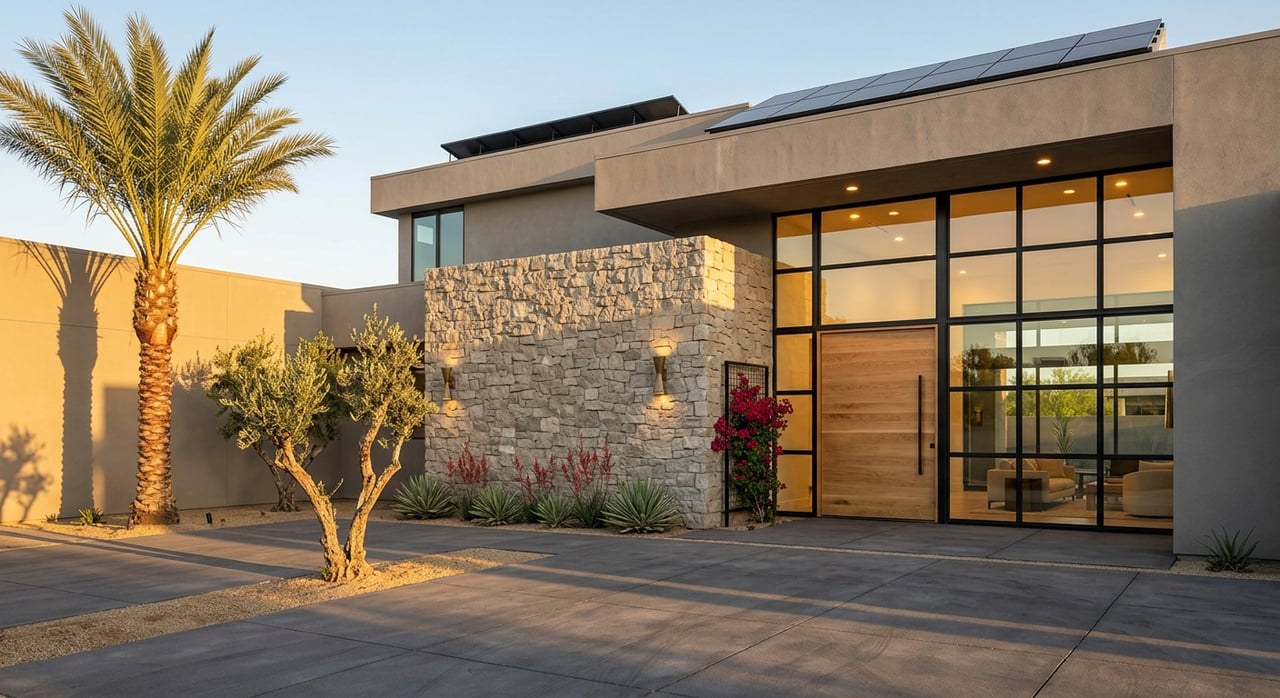
Comparing La Quinta Newer Communities vs Established Areas
June 4, 2026
June 4, 2026
If you are deciding between a newer home and an established community in La Quinta, you are really choosing between two different ownership experiences. Some buyers want the ease of newer systems and more modern floor plans, while others are drawn to mature landscaping, long-standing club culture, and neighborhoods with a deeper history. This guide will help you compare both paths so you can focus on the La Quinta community that best fits how you want to live. Let’s dive in.
La Quinta is not a one-era housing market. You can still find new-build opportunities and newer resort-style neighborhoods, but you can also find long-established golf and country club communities with homes dating back decades.
City documents for the Coral Mountain Specific Plan describe a 384.55-acre master-planned project with about 496 detached homes and 104 resort residential units at buildout. At the same time, buyers can compare newer luxury options like Toll Brothers at Griffin Ranch and Andalusia with established communities such as PGA WEST, Rancho La Quinta, La Quinta Country Club, and La Quinta Cove.
That mix matters because the age of a community often shapes the design, HOA structure, maintenance expectations, and overall feel of ownership. In La Quinta, newer versus established is rarely just about the year built.
Newer communities in La Quinta often appeal to buyers who want a more current design language and a simpler maintenance outlook in the early years of ownership. These neighborhoods are often planned with a more uniform look and a strong amenity focus.
Toll Brothers at Griffin Ranch promotes refined single-story designs, open floor plans, optional cabanas, and 3- to 4-car garages. Andalusia describes contemporary homes and villas with Spanish-inspired exteriors, contemporary interiors, customizable finishes, and sustainable features such as solar power and other energy efficiencies.
For many buyers, that means a more turnkey feel from day one. You may see cleaner lines, larger open living spaces, and a more standardized architectural style across the neighborhood.
A newer home can make sense if you want:
That does not make newer communities automatically better. It simply means they can align well with buyers who value predictability, updated materials, and a polished amenity package.
Established communities often appeal to buyers who want a neighborhood with history, mature landscaping, and a long track record of club and community life. In La Quinta, these areas can offer a broader mix of architecture and a different visual character than newer developments.
PGA WEST and Rancho La Quinta began in the 1980s. The city historic survey dates La Quinta Country Club and La Quinta Golf Estates homes to the 1960s and 1970s, while La Quinta Cove includes older homes and a range of styles from Spanish Colonial Revival casitas to Santa Fe Pueblo, Mid-Century Modern, and Mediterranean architecture.
That variety can be a major draw if you do not want a neighborhood where every home feels cut from the same template. Established communities also tend to have mature trees, more settled streetscapes, and a heritage that some buyers value just as much as the home itself.
An established community may be a better fit if you want:
The tradeoff is that older housing stock can come with more near-term planning for maintenance, updates, or system replacements. That is not a negative in every case, but it should be part of your decision.
In practice, one of the biggest differences between newer and established La Quinta communities is how the homeowners association is set up. Buyers often focus first on the home, but the HOA structure can have just as much impact on daily life and monthly costs.
Toll Brothers at Griffin Ranch is a gated new-construction enclave with its own HOA identity and a club-centered amenity package. Its HOA highlights the Griffin Club, 24-hour guarded gates, a clubhouse, pool, tennis, pickleball, and other shared amenities.
For buyers, that can feel more straightforward. There is often a clearer relationship between dues and the amenities you use every day.
PGA WEST is more layered. Its residential association says the community includes Res 1, Res 2, The Fairways, and a separate Master Association, with the master association maintaining common areas, gates, patrol service, and other shared infrastructure. Res 1 alone includes 1,422 homes, 54 community pools, and 304 acres.
Rancho La Quinta also uses multiple association layers, with owners potentially interacting with the Master Association, the Casitas at Rancho La Quinta Association, or the Ventanas Community Association. Its HOA resources focus heavily on maintenance requests, architectural guidelines, remodel forms, and association documents.
La Quinta Cove is different again. Its volunteer-run neighborhood association focuses more on preservation, code compliance, and community issues rather than a resort-club model.
Before you make an offer, confirm:
La Quinta Country Club explicitly states that membership and homeownership are independent. That is an important reminder that owning in a club community does not always mean club access comes with the property.
Architecture is another clear dividing line between newer and established La Quinta communities. The difference is not only cosmetic. It can shape how a home lives, how much customization you may want, and whether the neighborhood aesthetic matches your taste.
Newer developments often emphasize contemporary desert living. You are more likely to see open layouts, single-story designs, modern finishes, and a consistent visual identity across the community.
That consistency can be a benefit if you want a clean, cohesive look and a more current layout for entertaining or seasonal living. It can also make the buying process feel simpler because the overall design language is easier to compare from home to home.
Older La Quinta neighborhoods often include homes from different decades and a broader mix of styles. In places like La Quinta Cove and La Quinta Country Club, that may mean anything from early casitas to Mid-Century Modern and Mediterranean influences.
If you enjoy character, variation, and the possibility of a home with a more distinct identity, established areas may stand out. You may also find refreshed amenities in older communities, even if the underlying housing stock dates back much earlier.
The age gap becomes especially important when you think about energy performance and maintenance planning. A newer home and an older home may offer very different ownership costs over time.
The California Energy Commission says the 2025 Energy Code expands heat pumps in newly constructed residential buildings, encourages electric-readiness, strengthens ventilation standards, and applies to permit applications filed on or after January 1, 2026. The agency also says the code is designed to lower utility bills and improve comfort.
For buyers, that means newer construction may align more closely with current energy standards and comfort expectations. It can also mean fewer immediate projects after closing.
The California Energy Commission notes that at least 50 percent of California single-family homes were built before the state’s first energy standards. In established La Quinta communities, that makes it especially important to evaluate windows, HVAC performance, insulation, irrigation, and the age of major systems.
In some golf communities, maintenance also intersects with HOA oversight. PGA WEST says landscape work is handled year-round by in-house staff and contractors, and homeowners need approval before changing landscape, hardscape, or irrigation. Rancho La Quinta similarly requires approval for exterior changes, approved plant palettes, and in some cases association-managed front-yard landscape maintenance.
The best choice usually comes down to your ownership style, not whether newer or established is universally better. In La Quinta, each option serves a different kind of buyer priority.
For many second-home and move-up buyers, this decision is less about compromise and more about clarity. When you know how you want to live, the right community type becomes much easier to spot.
When you tour La Quinta communities, compare more than the home itself. Ask how the neighborhood is governed, what the dues actually cover, whether club access is separate, and what level of design review applies after you move in.
Then compare those answers against your real priorities. If you want low-friction ownership and a current look, a newer community may rise to the top. If you want character, heritage, and a deeper sense of neighborhood history, an established community may be the better match.
A thoughtful comparison now can save you time, money, and frustration later. If you want help sorting through La Quinta’s newer and established options with a local, founder-led perspective, Joint Luxury Group is here to help you narrow the field and move with confidence.
As a dedicated Real Estate Agent, Joseph has seamlessly integrated into the local market, establishing himself as a go-to professional for all Real Estate needs. Whether buying, selling, or investing, Joseph is the trusted ally you can rely on for all your Real Estate endeavors.