A Guide to Cathedral City Move-Up Homes
July 9, 2026
July 9, 2026
If you have outgrown a condo, patio home, or smaller starter house, Cathedral City may deserve a closer look. Many move-up buyers want more square footage, a usable yard, and a layout that fits real daily life without jumping straight into the most high-profile addresses in the Coachella Valley. This guide will help you understand what Cathedral City single-family homes often offer, what ownership costs to study carefully, and how to judge long-term fit and resale potential. Let’s dive in.
Cathedral City sits in the central Coachella Valley, bordered by Palm Springs to the west and Rancho Mirage to the east according to the city’s general plan. That location gives you practical access to golf, parks, shopping, and cultural amenities while keeping you close to several of the valley’s best-known lifestyle hubs.
For many move-up buyers, the appeal is not just price. It is about finding a home base with more living space and outdoor flexibility while staying connected to the broader valley. Cathedral City often works well if you want a detached home and a central location without making your decision based only on a name or resort profile.
The city also highlights neighborhoods, golf, parks, shopping, and cultural events as part of everyday community life. Its downtown civic area includes the community amphitheater and nearby public facilities, which adds another layer of convenience for buyers who want access to local amenities close to home.
A smart comparison starts with lifestyle, not just listings. Palm Springs stands out for airport access, downtown dining, attractions, art galleries, and a busy events calendar. Palm Desert is known for the El Paseo shopping corridor, art galleries, and tourist-driven activity.
Rancho Mirage leans more toward resort, medical, and research-centered identity with well-known shopping, entertainment, cultural, and dining options. Cathedral City often lands in the middle as a practical choice for buyers who want to stay close to all three areas while focusing on space, layout, and day-to-day ownership value.
If you picture spending most of your free time in restaurants, galleries, and event districts, another nearby city may be your strongest match. If you want a central base with room to grow and easy access across the valley, Cathedral City can be a very balanced option.
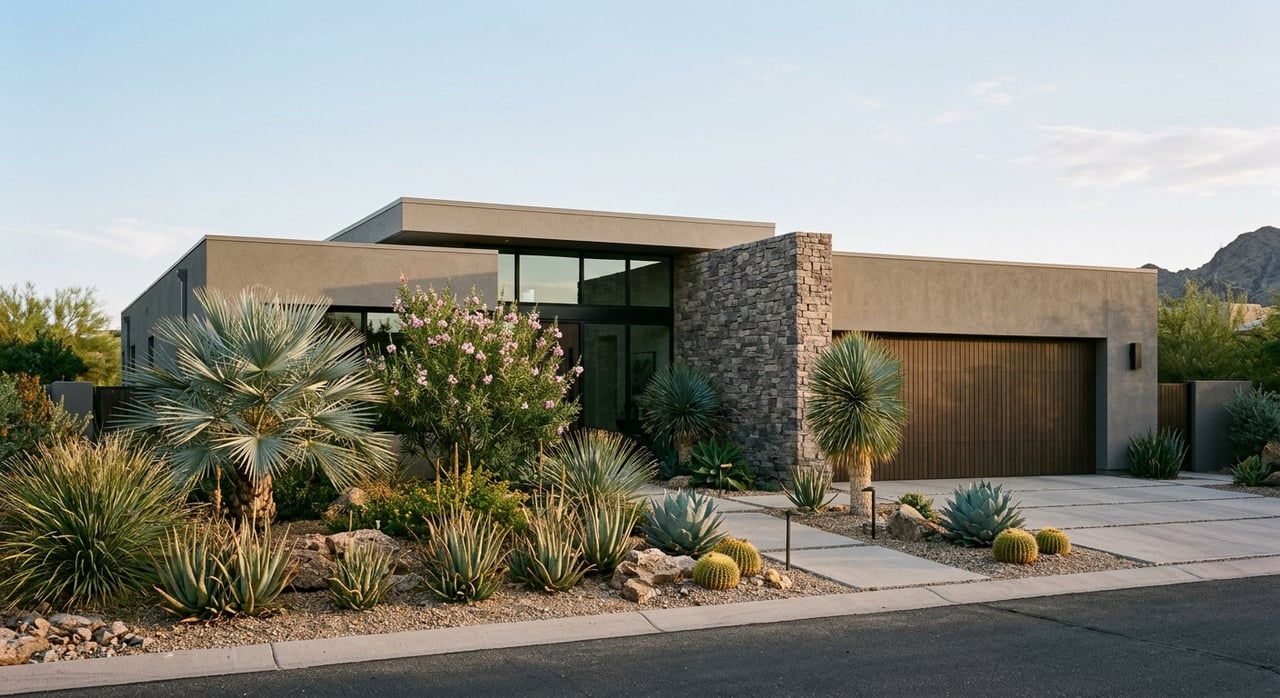
Cathedral City does not offer one uniform housing style, and that is part of its appeal. A city guide shows a median year built of 1988, an average single-family home size of 1,709 square feet, and a median lot size of 7,840 square feet. For move-up buyers, that often means a real jump in usable space without stepping into an oversized property that feels hard to manage.
Representative listings show many detached homes ranging from about 1,700 to 3,100 square feet. Lots often fall around the 7,800 to 9,600 square foot range, which can offer enough outdoor room for entertaining, pets, gardening, or future improvements while still feeling manageable.
Older neighborhoods may offer more varied floorplans and the feel of classic desert subdivisions. These homes can be attractive if you value yard space, mature surroundings, and a layout that does not feel identical to every home around it.
Newer communities often follow a more standardized move-up formula. You will commonly see open living areas, three or four bedrooms, two-car garages, solar features, covered patios, and flexible spaces like lofts, studies, guest suites, or casitas.
One current new-home community, Avante in Verona, advertises floorplans from 1,670 to more than 2,200 square feet with three or four bedrooms, private backyards, downstairs bedrooms, and lofts. Rio Del Sol materials show a similar pattern, with single-story plans from about 1,401 to 2,539 square feet, open great rooms, casitas, and lots large enough for a pool or described as pool-size.
When you move up, it helps to focus on features that improve daily use and future flexibility. More square footage matters, but layout often matters more. A home that uses space well can feel like a bigger upgrade than a larger home with awkward rooms.
Look closely at these practical features:
For many buyers, these features support several stages of ownership. They can make the home easier to enjoy now and easier to position well later if your needs change.
Older and newer homes in Cathedral City each bring different strengths. Neither is automatically better, so the right fit depends on how you want to live and what kind of maintenance or predictability you prefer.
Older neighborhoods may give you:
Newer communities may give you:
The tradeoff is often simple. Older homes may offer more lot flexibility and character, while newer homes may reduce immediate update needs and deliver a cleaner, more modern floorplan.
If you are shopping in a planned development, treat the HOA review as a financial exercise, not just a rules review. In California, buyer disclosures for planned developments generally include governing documents, operating rules, financial statements, the operating budget, the most recent reserve study, the assessment and reserve funding summary, and a statement of current regular and special assessments and unpaid charges.
That package can tell you a lot about how the community is run. It may also show whether the association appears well-funded, whether rules may affect how you use the property, and whether there is a risk of higher costs later.
One important budgeting point is that HOA dues are usually paid directly to the association, not through the mortgage payment. That means you should calculate them separately when reviewing monthly affordability.
Cathedral City also notes that private streets, unimproved streets, and gated communities are not included in the city street-sweeping program. For buyers, that is a useful reminder that some neighborhood upkeep or private-road maintenance responsibilities may sit with the HOA rather than the city.
Your move-up decision should be based on the full cost of ownership, not just the purchase price. In California, the basic property tax rate is 1 percent plus voter-approved debt or similar levies. In Riverside County, property tax bills are mailed in late September or early October and are generally due in two installments on December 10 and April 10.
You should also know that supplemental assessments can create extra tax bills after a change in ownership or new construction. That can surprise buyers who only budget for the prior owner’s tax bill or a lender estimate.
A strong monthly cost review should include:
This approach gives you a truer picture of affordability and helps you compare one neighborhood with another on equal terms.
If future flexibility matters to you, Cathedral City’s ADU rules are worth noting. The city states that ADUs are permitted in all zones that allow residential uses and offers pre-approved detached ADU plans and garage-conversion JADU plans.
That may matter if you are thinking ahead about multigenerational living, guest space, or long-term property utility. Of course, the property’s lot, layout, and any governing community documents still matter, but ADU potential can be a meaningful value point when comparing homes.
The best move-up home is not just the one that feels good today. It should also have features that remain useful to future buyers. In Cathedral City, that often means balancing indoor flexibility with practical outdoor use.
Features that can support resale appeal include:
Because Cathedral City includes both older tract homes and newer open-plan detached homes, strong resale candidates are often the homes that avoid extremes. A property with practical parking, good flow, and comfortable outdoor living usually has broader long-term appeal than one with a feature set that only fits a narrow buyer profile.
As you narrow your search, compare homes and communities based on how you will actually live in them. Think about the layout you need, the level of privacy you want, and how much outdoor maintenance feels realistic.
Then compare those priorities against the full monthly cost. A home with a slightly smaller footprint but a better layout and lower carrying costs may be a stronger move than a larger home that stretches your budget every month.
The most useful due diligence documents before making an offer are usually the HOA budget, reserve study, CC&Rs, recent meeting minutes, and the association statement showing regular and special assessments. Those documents often reveal whether a community is financially stable, unusually restrictive, or more likely to face future assessment increases.
If you want help weighing lot size, layout, HOA structure, and day-to-day ownership costs in Cathedral City or nearby Coachella Valley communities, Joint Luxury Group offers founder-led guidance tailored to the way you want to live.
As a dedicated Real Estate Agent, Joseph has seamlessly integrated into the local market, establishing himself as a go-to professional for all Real Estate needs. Whether buying, selling, or investing, Joseph is the trusted ally you can rely on for all your Real Estate endeavors.