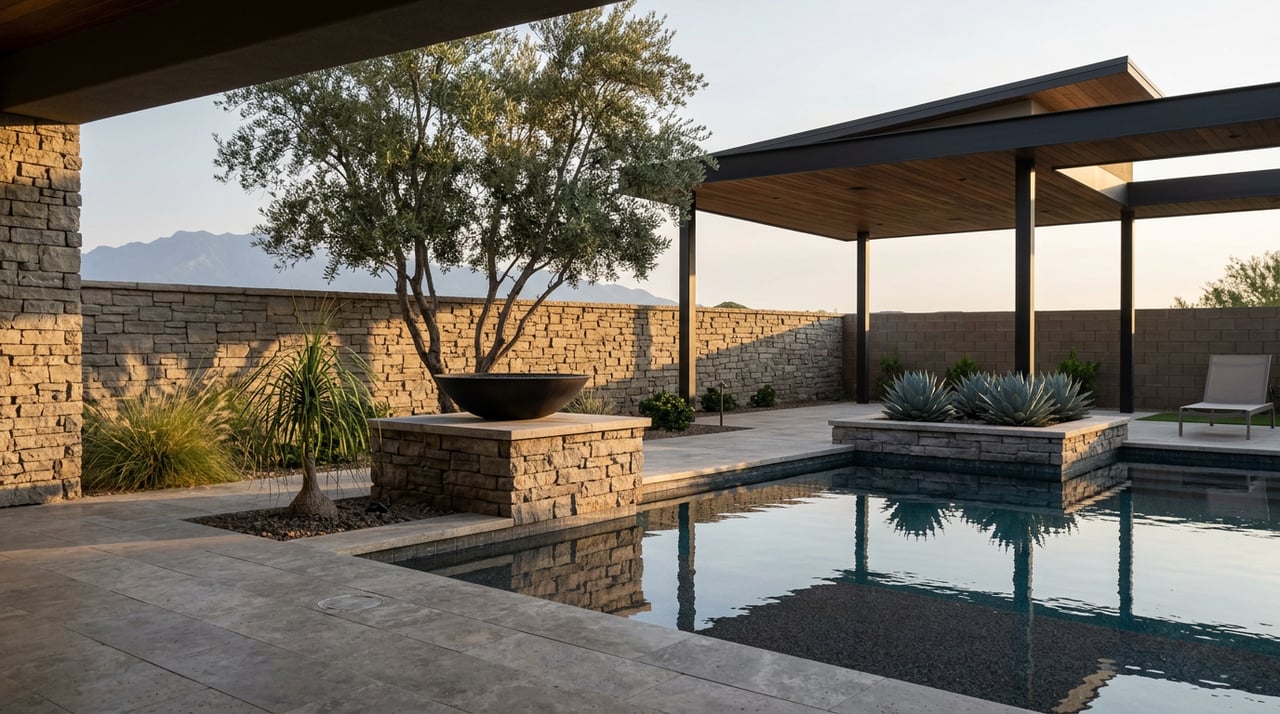
La Quinta Short-Term Rental Permit Rules: What Buyers Must Know
September 17, 2026
September 17, 2026
A furnished villa near PGA West goes on the market with a folder of rental statements attached. Twenty-two bookings last winter. A tidy nightly rate through the American Express and the BNP Paribas Open. A buyer sees the number, does the math on a mortgage payment against that income, and writes an offer assuming the business transfers along with the deed.
It doesn't. Under La Quinta Municipal Code Section 3.25.050(B)(2), the short-term vacation rental permit attached to that address belongs to the seller, not the house, and in La Quinta the city will not issue a new General or Primary permit to the buyer unless the property happens to sit inside a short, specific list of exempt locations. Everywhere else, the rental income on the listing sheet is a photograph of someone else's business, not a preview of the buyer's.
This is the piece of the La Quinta market that trips up more second-home buyers than any HOA fee or golf membership tier, and it rarely shows up until escrow is already open.
La Quinta stopped issuing new General and Primary short-term vacation rental permits on May 20, 2021, and that ban has stayed in place through every amendment since. The rule sits in Section 3.25.055 of the city's municipal code, and it is not a moratorium waiting to lift. It is a standing policy the city council has revisited and left in place year after year.
What makes this consequential for a buyer rather than just a policy footnote is a single operational fact: existing permits renew annually for the owner who holds them, but they are not assigned or sold at closing. A new owner has to apply from zero, in their own name; outside the exempt list, the Homeshare and Large Lot pathways described below may still be available, but new General and Primary permits are not.
That means the seasonal income history attached to a listing is only that: history. It tells you what the previous owner could legally do with the address. It does not tell you what you can do with it.
For new General and Primary permits, the exemption, as described in BNBCalc's 2026 guide to La Quinta short-term rental rules, isn't a citywide carve-out for country clubs or golf communities generally. It is a named list of specific zones and projects, and if an address isn't on it, that route is closed regardless of how the HOA feels about rentals.
| Exempt category | What qualifies |
|---|---|
| Tourist Commercial and Village Commercial zoning | Residential projects located within these two zoning districts |
| SilverRock Resort Specific Plan | Properties within the SilverRock plan area |
| Estates at Griffin Lake Specific Plan | Properties within that specific plan |
| Named residential projects | Legacy Villas, La Quinta Resort's Spa and Tennis Villas, Puerta Azul, Signature at PGA West, Polo Villas, Talus, Casitas Las Rosas |
| Development agreement or entitlement condition | Any project whose recorded CC&Rs and city entitlement affirmatively authorize STVR use |
| A defined block near Avenida Obregon | Properties within the defined block |
An HOA that welcomes short-term rentals in its own governing documents does not put an address on this list. The city has said as much directly: association approval and city eligibility are two separate questions, and passing one does not satisfy the other.
The City of La Quinta says the Homeshare and Large Lot pathways outside the exempt list became available effective January 4, 2024.
A Homeshare permit is available almost anywhere in the city, including inside country club neighborhoods that are otherwise off limits to new rentals. The requirement that makes it narrow: the owner has to be physically present in the home for the entire length of every guest's stay. For a buyer whose plan is winter occupancy while they live in Los Angeles or the Bay Area the rest of the year, this pathway doesn't solve that problem. It solves a different one, aimed at owners who actually want to host guests in their own home.
A Large Lot exemption is available to a single parcel of 25,000 square feet or more, but it requires a public hearing before the city council and approval on a case-by-case basis. It is a path, not a guarantee, and most standard golf-community lots don't come close to that size.
Outside these two doors and the named exempt list, a buyer's only legal option is a lease of 31 consecutive days or longer. No city permit. No transient occupancy tax. Also no nightly rate.
The fallback isn't nothing. February through April is peak season across the valley, with the American Express, the BNP Paribas Open, and the Coachella and Stagecoach weekends all landing inside that window. A 31-day corporate or seasonal lease timed to that stretch can absorb much of the demand a weekly rental strategy would have captured, just with fewer turnovers and less operational load.
The mistake is underwriting a purchase as if the two models charge the same effective rate. They don't. A buyer who prices a home against a seller's weekly nightly-rate history, then discovers at close that the address is monthly-only, has paid the weekly-rental price for the monthly-rental business.
For the buyers who do land inside an eligible pathway, the fee schedule matters too, and it isn't flat. According to the City of La Quinta's published permit rates, a Homeschare permit for a home with fewer than five bedrooms runs $315 a year, a Primary permit runs $787.50, and a General permit, the category most investors want and the one the city no longer issues outside exempt areas, runs $1,050. Four specific projects, Legacy Villas, Puerta Azul, Signature at PGA West, and La Quinta Desert Villas, carry a mitigated General permit that cuts that cost by roughly 70 percent, a detail worth knowing only if you're already shopping inside one of those four names. On top of any permit fee, the city collects a 10 percent transient occupancy tax, and unlike some short-term rental markets, platforms don't automatically remit that on the host's behalf in La Quinta. It's the owner's responsibility to file it monthly.
Buyers cross-shopping La Quinta against neighboring cities often assume the whole valley operates under one rental philosophy. It doesn't, and the differences matter enough to change which city makes sense for a rental-focused purchase.
Indian Wells and Rancho Mirage have their own short-term rental rules and exemptions, worth checking address by address. Palm Springs, by contrast, has a different rental framework.
The practical upshot: "does this city allow short-term rentals" is the wrong first question. "Does this specific address, in this specific neighborhood, have a path to a permit today" is the one that actually determines whether a rental thesis survives closing.
Buyers who get burned here usually did their homework in the wrong order. The sequence that avoids it:
Reversing that order is how a buyer ends up owning a home they can't rent the way they planned to.
Does an active STVR permit transfer to a new owner at closing? No. The permit is issued to the individual named on the application. A new owner in an eligible location has to apply fresh, in their own name.
Can a buyer just apply for a new General permit after closing? Only if the address qualifies under an exemption described above. Outside those exemptions, the general and primary categories are not available to new applicants at all.
Does a Homeshare permit let an absentee owner rent out the whole house? No. Homeshare requires the owner to occupy the residence for the full length of every guest stay. It is built for hosted visits, not investment-style rentals.
If short-term rental isn't available, is a 31-day lease still a real strategy? It can be, particularly timed to the valley's peak season, but it is a different business than a nightly rental and should be priced as one from the start.
A purchase that hinges on rental income deserves the same scrutiny as any other income-producing asset, verified at the address level, not assumed from the city's reputation. If you're weighing a La Quinta property against other Coachella Valley communities and want the permit question answered before you write an offer, Joint Luxury Group can walk the exempt-area map and the HOA file with you before you're under contract, not after. Let's Connect.
This article is general information, not legal, tax or financial advice. Consult a qualified professional about your situation.


As a dedicated Real Estate Agent, Joseph has seamlessly integrated into the local market, establishing himself as a go-to professional for all Real Estate needs. Whether buying, selling, or investing, Joseph is the trusted ally you can rely on for all your Real Estate endeavors.